
AI Decisioning Agent Builder
Evolving from Assistive AI to Autonomous Decisioning
Overview
Tealium is an enterprise Customer Data Platform that helps companies collect, unify, transform and activate customer data in real time to power personalized marketing and customer experiences across channels.
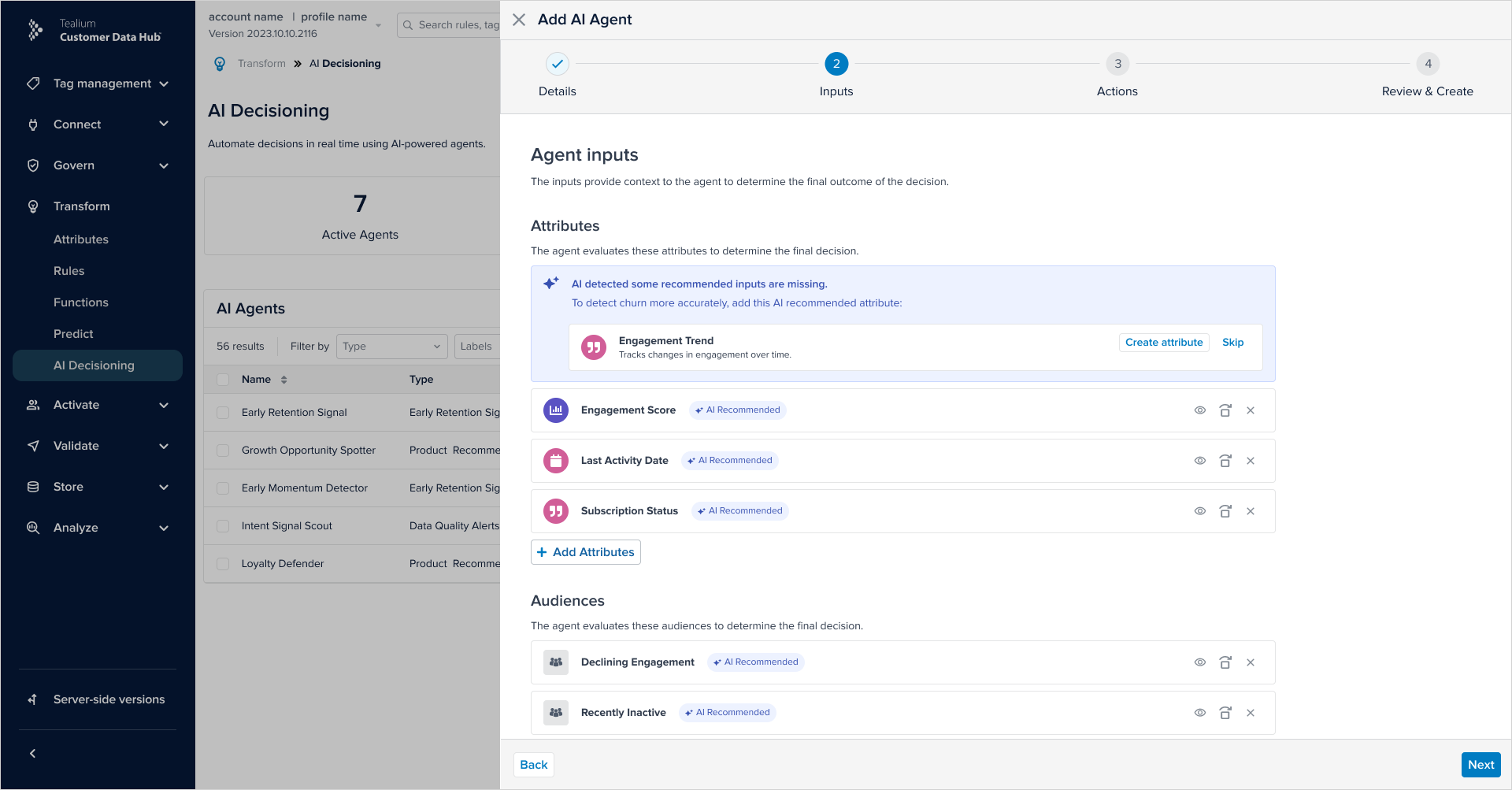
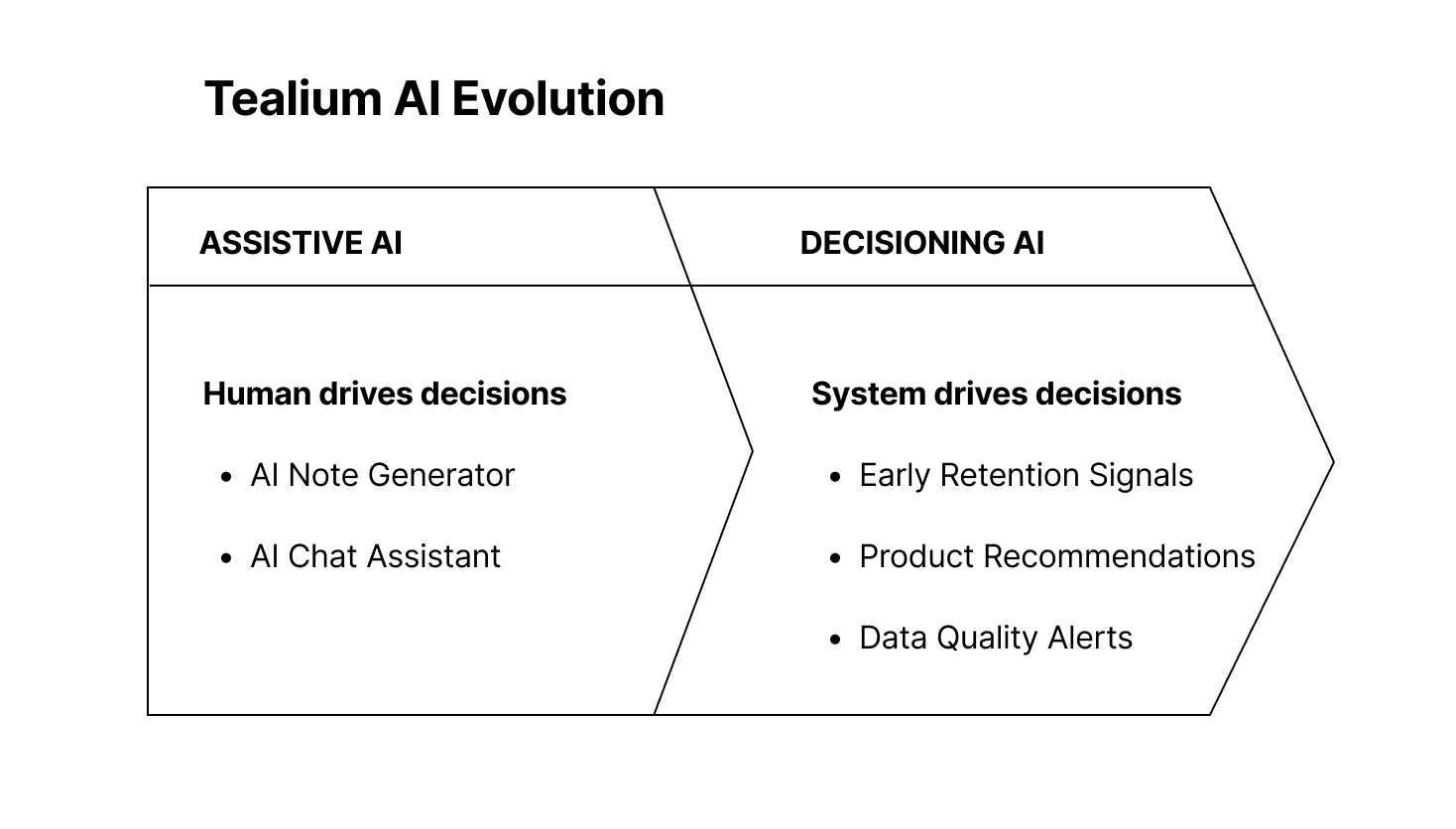
I led the evolution of Tealium’s AI capabilities, first designing AI Note Generator and AI Chat Assistant, then defining and launching the company’s first AI Decisioning Agent framework.
This shifted the platform from assistive AI to governed, predictive automation embedded directly into audience creation and activation workflows.
Impact
Platform
Introduced Tealium’s first AI decisioning capability
Established scalable agent framework for predictive automation
Established reusable agent framework
Built governance model for automated AI workflows
Defined governance lifecycle reused across AI initiatives
Business
Directly helped secure the company’s largest deal of the year, a $10M+ enterprise win with Europe’s third largest bank, Crédit Agricole Group, beating Adobe.
Strengthened AI positioning in competitive enterprise sales cycles
Contributed to Tealium’s recognition as a Leader in the 2025 Gartner Magic Quadrant for CDPs
Advanced the platform from AI assisted workflows to an intelligent decisioning infrastructure.
Problem
Assistive AI improves productivity.
Decisioning AI influences customer outcomes.
Before this initiative:
AI did not create audiences
AI did not trigger connectors
AI did not automate lifecycle decisions
No governance model existed for automated activation
Introducing AI into activation workflows raised enterprise-level risks:
Who owns the decision?
What is editable vs system-managed?
How do we prevent over-automation?
How do we make invisible processing trustworthy?
The challenge was not introducing AI.
It was designing accountable AI.
My Role & Contribution
Foundation for Assistive AI
Designed:
AI Note Generator
Established:
AI interaction patterns
Transparency standards
Trust guidelines
Decisioning AI Leadership
I led:
UX Strategy
Defined decisioning AI as a new product category
Positioned automation as structured infrastructure
Proposed governance-first lifecycle (Draft → Review → Published)
Framed Early Retention Signals as the initial release use case
Structured roadmap between MVP and later phases
System & Interaction Design
Designed the end-to-end agent builder flow
Defined editable vs system-managed boundaries
Structured inspectable inputs for trust
Designed system-generated output architecture
Introduced performance insight layer to measure impact
Designed AI-detected missing attribute guidance
Partnered with engineering on async architecture alignment
Cross-Functional Alignment
Partnered with Product to define automation scope
Worked with Engineering on architecture implications
Partnered with Customer Success to validate churn pain
Hosted Early Product Workshop with AI/ML experts and domain leaders
Aligned Activation and Audience teams for safe integration
This introduced a new AI category into the platform.
Validation Strategy
Partnered closely with PM and Customer Success and spoke directly with enterprise customers, including:
Country Road Group
Abercrombie & Fitch
AstraZeneca
ASICS
Sapient
EMF
Liberty Mutual
Across conversations and renewal cycles, we identified:
Repeated manual churn segmentation workflows
Duplicated lifecycle rules across teams
Hesitation toward black-box automation
Insight:
Enterprise customers wanted automation — but with visibility and control.
Trade-Off Decisions
Automation vs Control
No auto-publish
Required Review state before activation
Transparency vs Cognitive Load
Exposed model inputs clearly
Hid background event attribute creation
Surfaced system-generated artifacts in summary
Flexibility vs Model Integrity
Inputs editable
System-generated audiences locked
Speed vs Governance
Avoided one-click automation
Required structured configuration before publishing
Each decision protected enterprise trust.
End-to-End Agent Flow

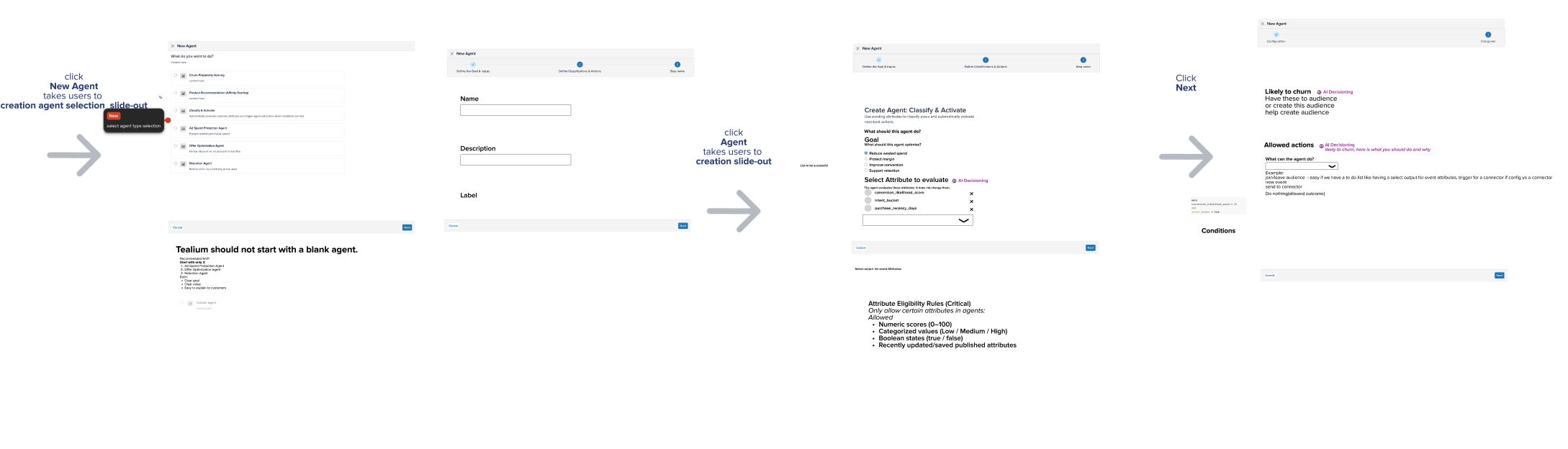
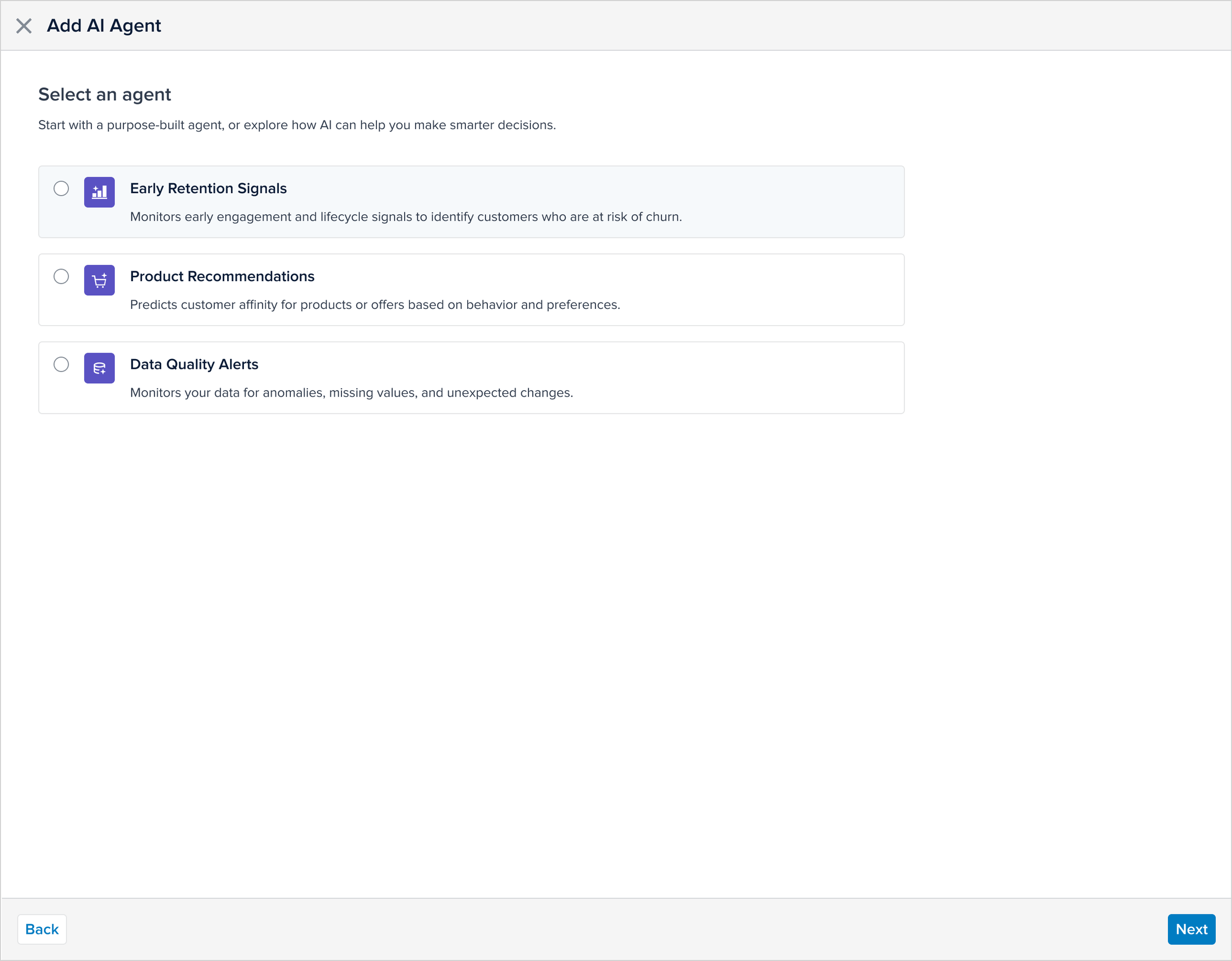
Step 1 — Select Decision Objective
Initial release: Early Retention Signals (Churn Detection)
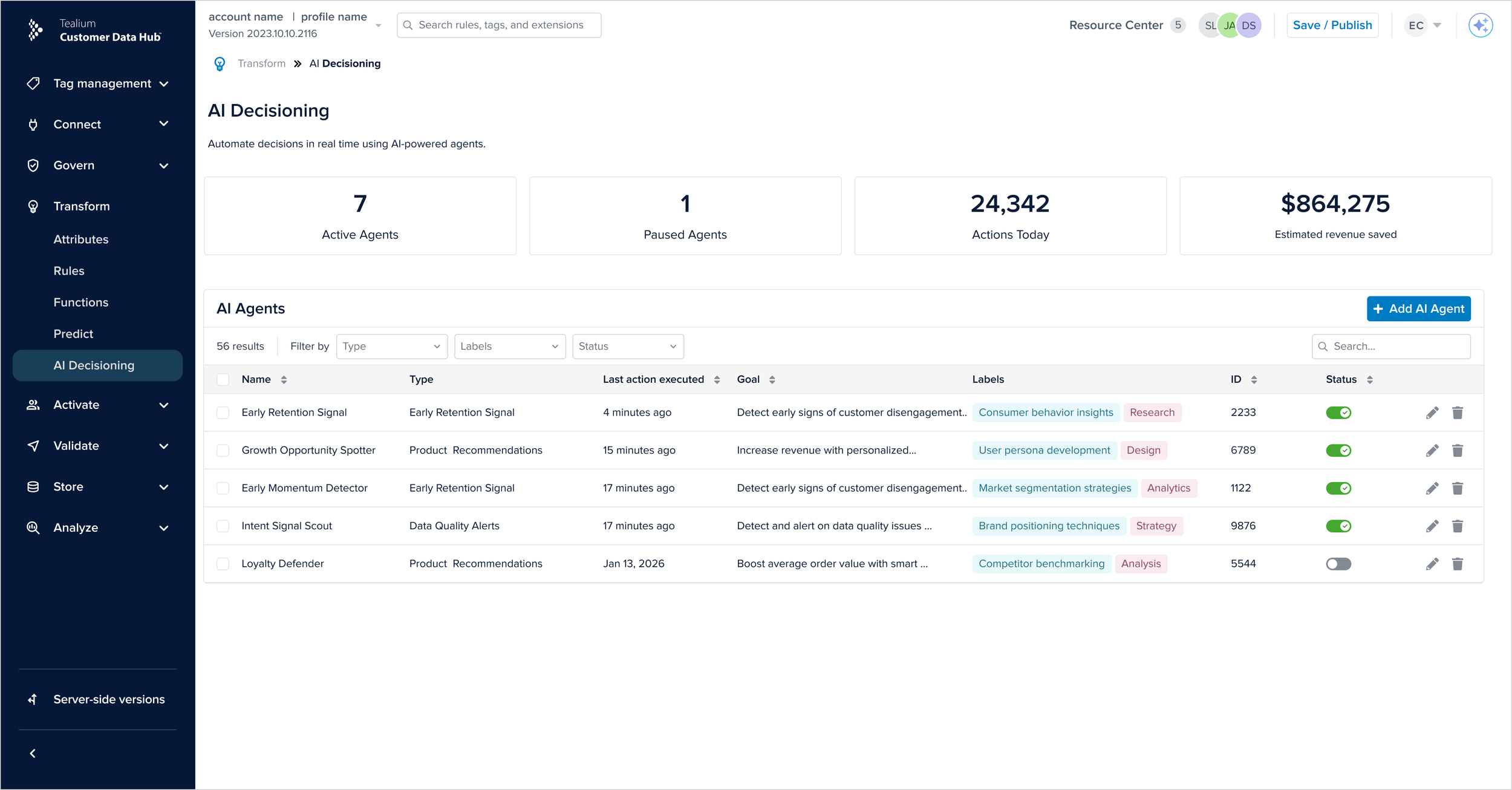
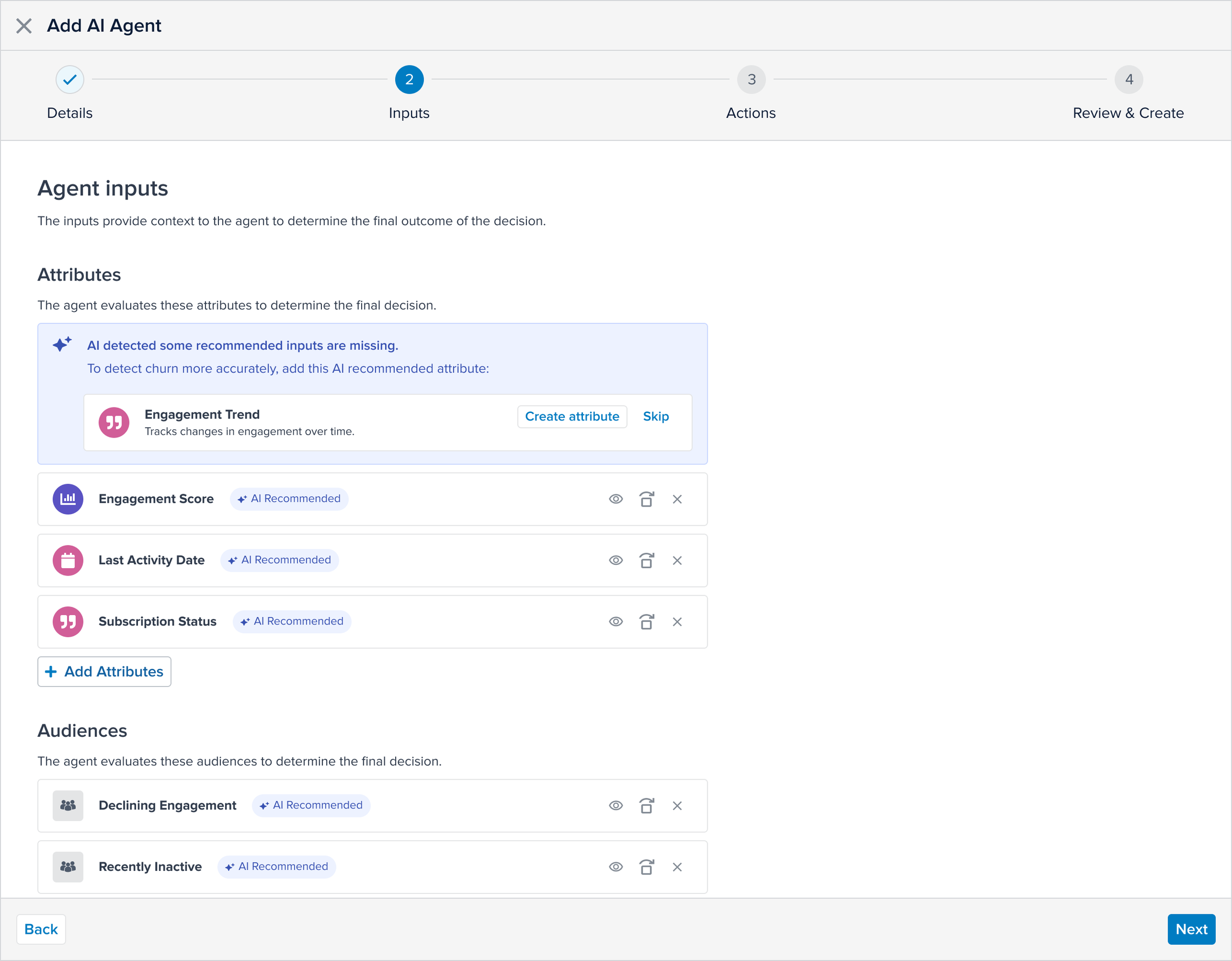
Step 2 — Review & Configure Inputs
Preloaded attributes surfaced
Users can replace or add inputs
Model inputs visible and inspectable
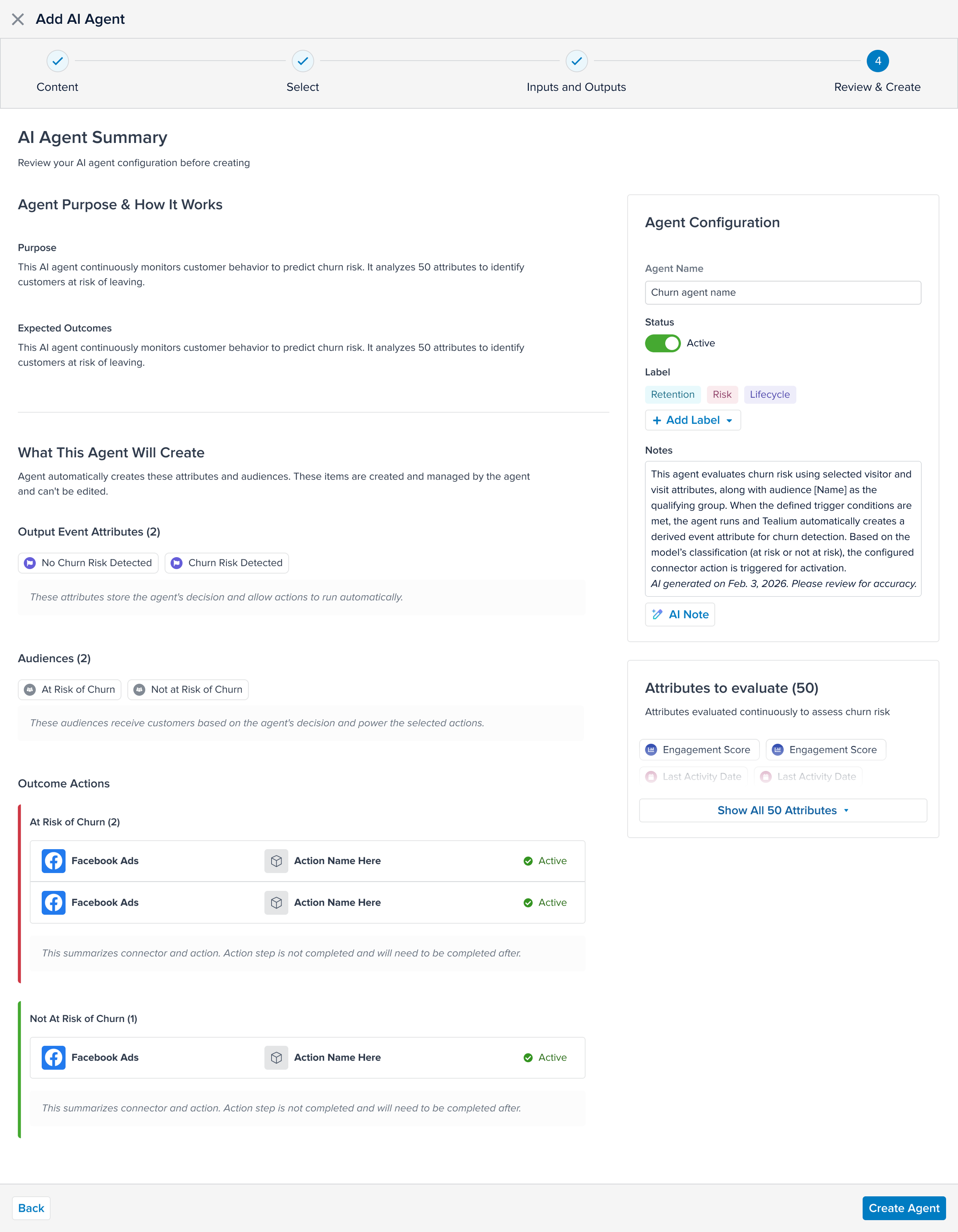
Step 3 — System-Generated Outputs
The system automatically generates:
At-risk audience
Not-at-risk audience
Supporting output attributes
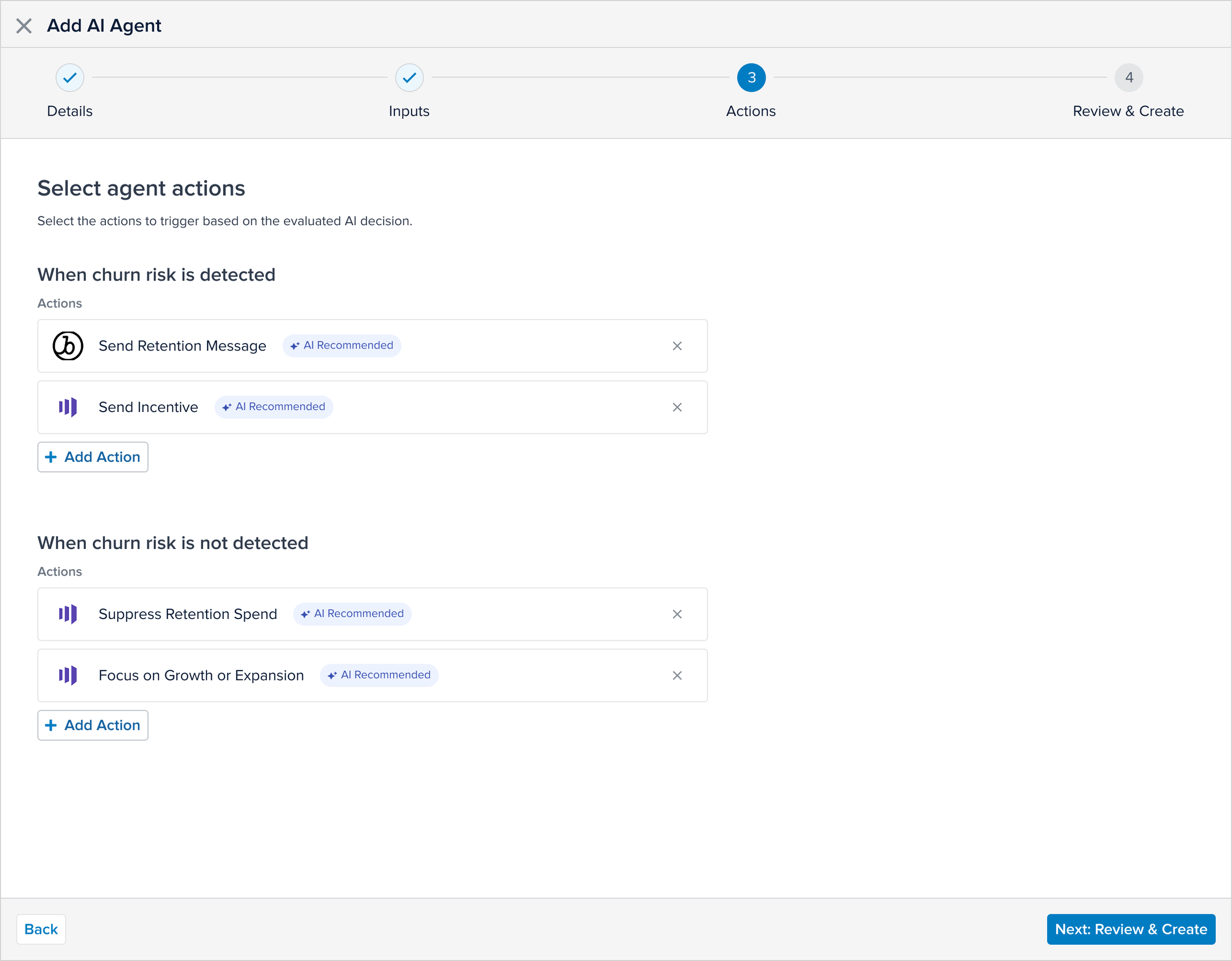
Step 4 — Activation Configuration
Audience → Connector → Action
AI influences activation but does not hide it.
Human oversight remains intact.
Step 5 — Lifecycle Governance
Draft → Configured → Review Needed → Published
AI is treated as a managed entity, not a toggle.
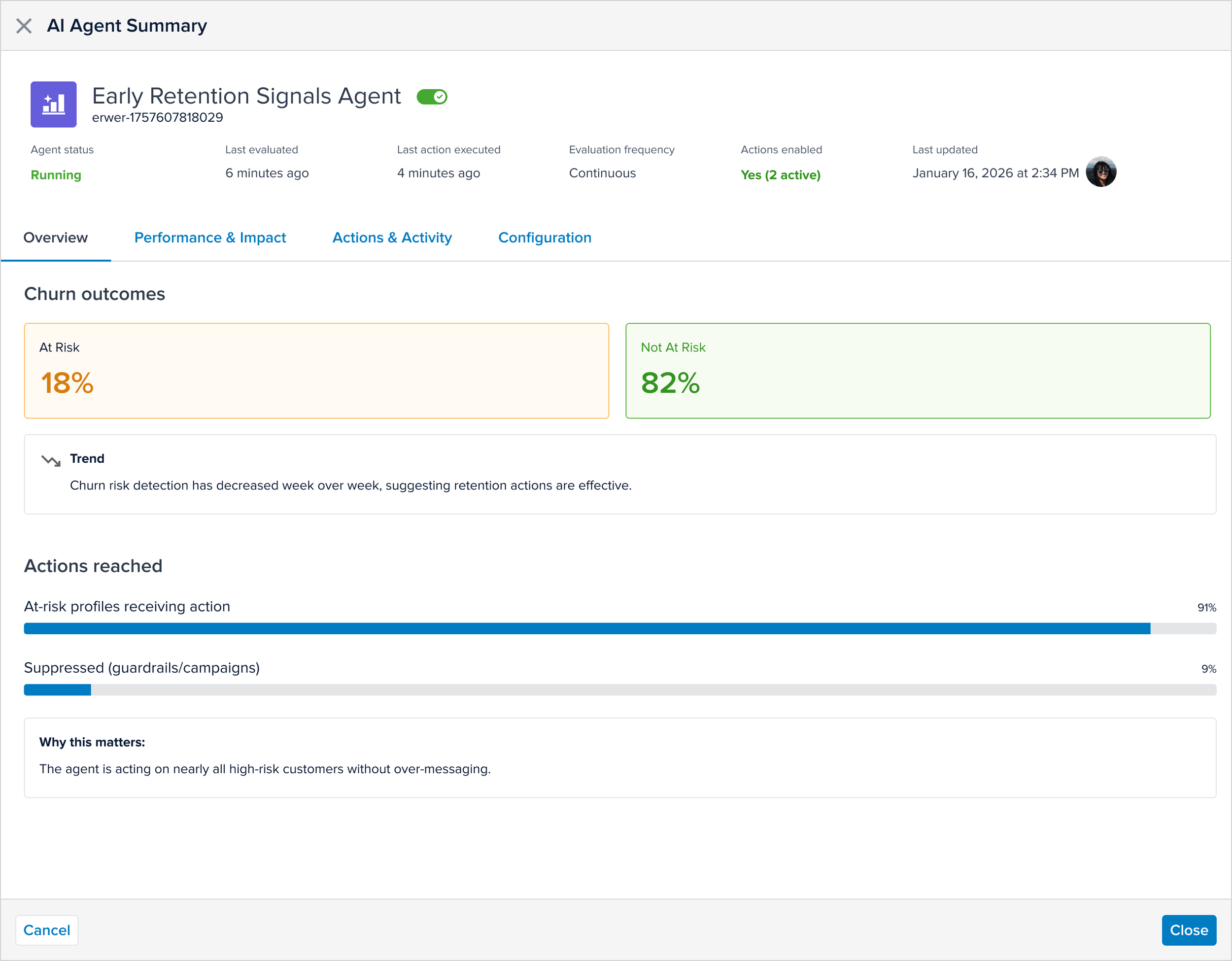
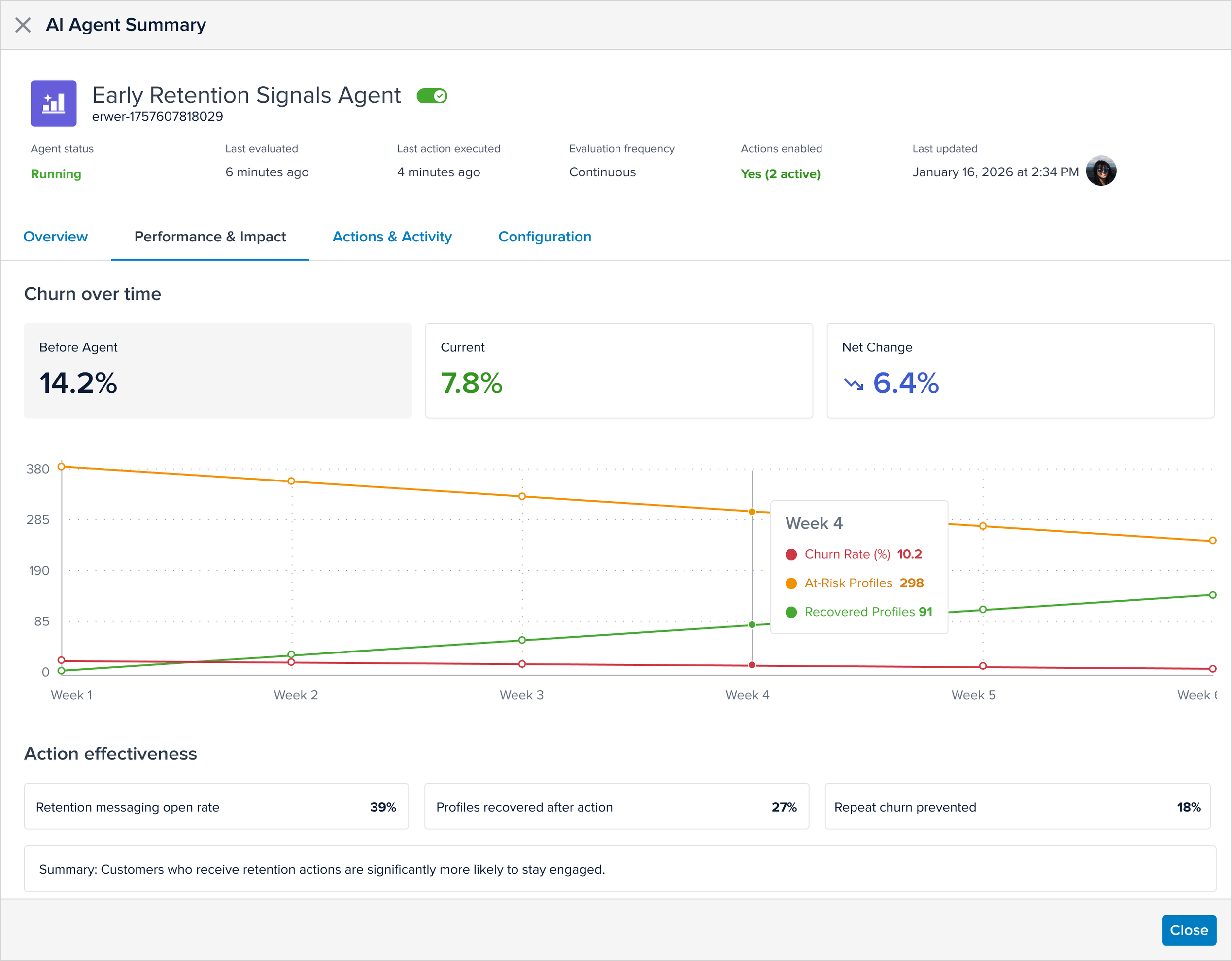
Step 6 — AI Summary
A summary slide-out appears after agent creation as a quick decision checkpoint
Explains in plain language what’s happening, summarizing insights so users understand, not just raw data
Shows expected impact and updates performance as real data comes in, with controls to adjust strategy
This matters because users can quickly grasp and monitor results in one place
Phased Delivery Strategy
To balance speed, governance, and technical feasibility, I collaborated with the Scrum team (Product and Engineering) to define a staged rollout.
Rather than delay launch for full analytics infrastructure, we sequenced core decisioning first, followed by advanced performance insights.
Phase 1 — MVP
Agent creation flow
Inspectable inputs
System-generated audiences
Governance lifecycle (Draft → Review → Publish)
Inline missing attribute detection
Initial performance visibility
Goal: Introduce accountable decisioning safely and quickly.
Phase 2 — Advanced Insights
Before vs after churn comparison
Ongoing agent performance tracking
Optimization recommendations
Expanded explainability
Required additional backend investment, so it followed the MVP release.
Solution Validation
Early Product Workshop
Cross-functional pressure test with Product, Engineering, AI/ML, and Customer Success to validate governance boundaries and automation risk.
Usability Testing (UserTesting.com)
Ran moderated and unmoderated studies to assess:
Clarity of what the agent will do before publish
Understanding of editable vs system-managed logic
Confidence configuring inputs and activation
Whether lifecycle states (Draft/Review/Published) reduced automation anxiety
Insights informed guardrails, labeling, and summary clarity before rollout.
Direct User Feedback
Validated input transparency, trust in generated audiences, and activation oversight expectations.
Internal Release
Refined lifecycle states, summary explanations, and background artifact communication.
Early External Release
Monitored configuration completion, activation adoption, and Customer Success hesitation signals.
What I Would Improve
Confidence scoring surfaced in UI
Add explainability summaries
Improve Agent performance dashboards
Optimization recommendations over time
Automation is phase one. Adaptive AI is phase two.